
How to take decision on Internal Wood Paneling in Hills
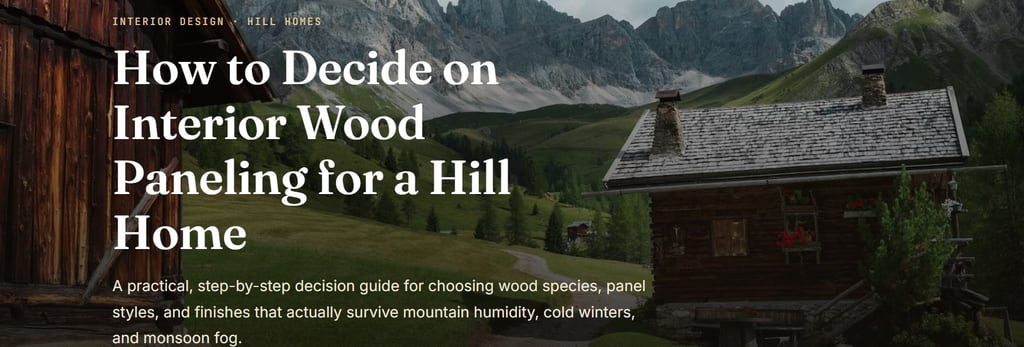
Internal Wood Paneling in Hill: A practical, step-by-step decision guide for choosing wood species, panel styles, and finishes that actually survive mountain humidity, cold winters, and monsoon fog.
REFINED INTERIOR
TSI Architects & Engineers
7/19/20261 min read
KEY HIGHLIGHTS:
Climate comes before wood choice — humidity, fog, and sun exposure should shape every decision that follows.
Map your rooms first — noting which walls face damp weather or direct sun prevents the costliest mistakes.
Match species to altitude — colder, higher homes favor resinous softwoods; humid regions favor engineered wood over solid timber.
Panel style should fit room function — tongue and groove, board and batten, wainscoting, and veneer each solve different problems.
Don't panel every room floor-to-ceiling in dark wood — reserve it for one anchor room so the house doesn't feel dark in winter.
Budget for the climb, not just the material — hill transport and labor travel can quietly inflate costs beyond the quoted rate.
Plan maintenance before installation — expansion gaps, termite treatment, and seasonal re-oiling are non-negotiable in hill climates.
Treat wood near stoves and fireplaces for fire safety — fire-retardant treatment or a non-combustible buffer is essential.
Let the wood tone respond to the outside view — warmer tones for valleys, lighter tones near snow line, darker tones against stone exteriors.
Choose artisan, prefab, or a hybrid based on need — artisans bring character, prefab brings consistency, and most experts blend both.